An In-Depth Look


Beyond Duty: Life in the Frontline of Iraq

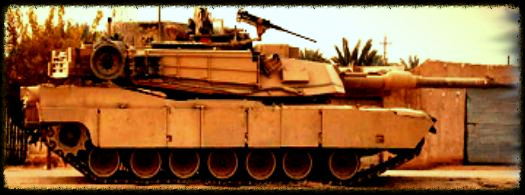
is the memoir of Lt. Meehan, a tank platoon leader in the First Battalion, Twelfth Regiment of the First Cavalry Division.  Recounting his deployment to the Diyala Province of Iraq and his difficult return to the States, this work reveals his transformation from a young man with clear ideals and ambitions to a worn soldier attempting to cope with the devastation of the war on his life.  It shows a soldier who, only weeks after declaring with certainty that he had killed “only bad guys,” discovers the shattering consequences of a war without battle lines.  It shows that a soldier can never say with certainty that he has only killed bad guys.

 Reviews

“This memoir is a descent into war's difficult terrain, a landscape which continues on within the veteran as he or she returns home. The archetype of the classic hero is nearly completely destroyed through the personal narrative which chronicles a series of harrowing events in order to reveal a deeper sense of the heroic.  Meehan's voice reminds us that the bleeding continues on after the guns have gone silent, even if we don't realize it.”

 --Brian Turner, award-winning author of Here, Bullet, and veteran of the Iraq War


"For better or for worse, this documents what the war in Iraq has been: young soldiers doing their heartbreaking best to do the right thing amid confusion, chaos and collateral damage."

--Mary Doria Russell, international award-winning author of A Thread of Grace and The Sparrow, nominated for the Pulitzer Prize


“Beyond Duty is a powerful and heartbreaking account of Lieutenant Meehan’s tour of duty in Iraq. . . This honest and painfully intense narrative is a reminder of the   terrible costs of warfare, not just as measured by blood or treasure, but also in terms of damage to the human psyche.”

--Tim O'Brien, award-winning author of The Things They Carried, Winner of France's Prix du Livre Entanger and finalist for both the Pulitzer Prize and the National Books Critics Circle Award


 "Meehan explores the complicated anxieties of battle and command with precision and intelligence.  He treats colossally horrific situations with admirable emotional restraint, and his strong taut narrative had a visceral impact.  This is a book that ranks among the very best writing that is being done today about the events on the frontline in Iraq."

 --James Hutchisson, The Citidel

Excerpts from Beyond Duty

 Excerpt from Prologue

The ferocity of missile impacts turned my attention back to the radio.  The explosions rattled our vehicles, and I waited to hear confirmation that the correct target had been hit.  Dust and debris rose above the city and mingled with the haze of the afternoon sky, and my radio fell silent. 

The silence lingered for a few seconds before my platoon sergeant radioed in.  A successful strike.  Target destroyed.  For a moment, I felt relieved that the missiles flew true.  All the doubts I had vanished, and I felt renewed confidence in my decision.  Then, within a minute, another voice, broken, sounded over the radio.

            “Did -- you see -- that?”

            I leaned in, trying to hear the broadcast more clearly.  It wasn’t coming from my company.  It was coming from a tank in Bravo Company, just to the north of my men.  Even though they had nothing to do with the event, they had a clear view down the street, and they saw the missiles strike.

            “Did you see that kid?”

I grabbed my headset, pressing it hard against my ears, trying to hear what they were saying.

I heard them say it again, “Did you see that kid,” and this time, with awful certainty, came a response.

 “There were a lot more in there.” 

The words hung in the air, and I looked at the men in my tank.  A new silence settled in.  A deeper, more devastating silence.  One that joins men together.  One that conspires.  One shared by all of us soldiers, from any war, who have witnessed the unspeakable and who, in our attempts to cope, pledge to each other, with simply a glance, not to say a word, not to resurrect what we have destroyed.  

This is my voice rising out of that terrible silence.

This is my story trying to order the ruins of that day. . .


Excerpt from Chapter 1


In Maine, surrounded by aging soldiers, I remembered my father’s eyes.  I imagined the stories behind them, and when one more old man took me by the shoulders and warned me with a stern voice, “Don’t crack. They’ll rely on you,” I tried to see the stories in his eyes.  I told him I appreciated his advice, but, in fact, I didn’t.  I couldn’t connect his life to mine, and I couldn’t see in his face the face of the soldier who one day left college to honor his friends who had died in war.  The music in the airport stopped, and someone announced the departure of our flight to Kuwait.  My men lined up, and I turned away from the old man.  Someone started the music again, and I headed toward the plane, leading my men into the Maine night and off to war. . .


Excerpt from Chapter 12


 The raid on February 9th tripped a House Borne IED.  The entire north side of the building was reduced to rubble, and dust and cries for help filled the air.  Armstead’s eyes widened as we rounded the corner and saw the devastation.

            “Jesus,” he said. 

            We stared at the scene.  Part of the wall surrounding the house had collapsed and, through the dust, we could see the outlines of soldiers climbing over it.  Two limped toward a Bradley just a bit further north, supporting each other, one with his arms under the other’s, lifting and carrying him as the injured soldier dragged his useless legs along the ground.  My eyes followed them then returned back to one of the Bradleys. 

            I now could hear the sounds of men in desperate pain.  They weren’t screaming.  They weren’t even yelling or crying.  They were making deep, guttural sounds that rose up from their lungs and their souls.  The sounds weren’t human.  They were animalistic, primal, and desperate.  They were loud, cutting through other sounds, rising up above the shouted orders and the crumbling house and demanding to be heard.  I hadn’t heard anything like this.  I hadn’t seen anything like this.  And I was scared.

            I knew I had to move to help, so I began to run toward the house and toward the voices.  Ahead of me, I saw another soldier approaching me.  I slowed down and peered through the haze at him.  I couldn’t see who it was, but he was carrying something.  He was hunched over, running as fast as he could, but whatever he was carrying in his arms was heavy, and he bent forward with its weight. . .

     . . . I could not figure out what he held.  I looked hard at it, trying to peer through the dust and haze.  It stretched across and hung over both of his forearms.  One end of it bounced as he ran.  He drew closer, and his shoulder brushed against me as he continued past me and toward the Bradley.  I stepped backward, watching him as he went by.  I finally saw clearly what he was holding, and I finally understood why he was hunched over.  Through the dust and the darkness of the fallen building, I could see that cradled in his arms, hugged close to his chest, he carried another soldier’s leg. . .


Excerpt from Chapter 16


I felt a dark heat inside me, and sometimes, in the days that followed, I felt aggression boiling.  I would go to a small enclosure near some of our CHU’s, and I’d lift weights, trying to find some place to direct all my energy.  The moment the workout ended, though, I’d feel the anger burn again, ripping away inside me.  I’d try to find other things to do--talk to some of my platoon or check emails--but none of it provided much release.  I felt the war changing me. . .

    . . . Each night, presumably, Americans tuned in to hear her [Anna Nicole Smith] story. Each night, I imagined, groups of friends talked about and discussed her celebrity and her image and her final moments.  All the while, their friends, their neighbors, their family died in Iraq.

    . . . Connecting the two was overblown and melodramatic.  To me, though, sitting in that mess hall, hands smeared with dirt and grease and the scum of the Iraqi canals, it didn’t feel trite or contrived.  It burned. . . I wondered how many people back home dared to turn off their televisions when she came on in order to make the point that there were other stories in the world worth listening to, that there were other tragedies unfolding. . .

    . . . Perhaps I should have simply acknowledged the effort to represent the war to the U. S. public in some neat, tangible, compact way.  I wasn’t though, and I’m still not, and when I saw Anna Nicole that night, and I thought of the men who were suffering and dying, both U. S. and Iraqi, both soldiers and civilians, and I thought of the corruption and the futility of the last few months, I could not tolerate it. . .

   . . . I decided I had to make a change.  If I were going to feel anger, if I were going to see this province unwind around me, and if I were going to leave the base each day knowing that most Americans were watching images of Anna Nicole on television, I was going to divorce myself from external measures of my success.  I couldn’t control the television news.  I couldn’t control Baqubah.  I couldn’t control the Army’s orders or the rules that bound me.  I couldn’t control much of anything, but I could control my platoon and myself, and I dedicated myself to taking back any section of Iraq I could, no matter how small and no matter how I would have to do it.  If that meant using force and refusing to engage in circular discussions with known deceivers, so be it.  Something had to change, and I was going to try to make it happen, even if I had to punish someone to do it. . .


Excerpt from Chapter 26


I knew that I was deeply depressed.  I was aware that I didn’t feel like I deserved to be seen with anyone else or, at times, even be alive anymore.  I was aware that my own shame was a dim shadow of the real tragedy of the death of the children, that my sadness was a ridiculous, insignificant fact in the face of the real fact, the real horror of the war, and thinking of that made me more depressed, more ashamed, and more disconnected from everyone around me.  I lived in the face of a deeper silence than the one I imposed on myself.  I lived in the silence I had called down on the children, and I could find no way to reconcile it, no way to make myself believe that I deserved to be alive when they no longer lived. 

I began to think about my Purple Heart and all that it stood for—the injuries in the line of duty and the sacrifice it represented.  That sacrifice seemed insignificant.  That award, and even the Bronze star, reminded me of the people I had killed.  I had chosen to live my life in a war zone and hoped to make a difference.  I had in some broad way sacrificed a life back home with AJ, and I had put myself at risk.  But that seemed insignificant in light of what I had done. . .


Send Questions or Comments to Author,  Shannon P. Meehan

and visit our Facebook page, Beyond Duty for updates and event information


Make a Free Website with Yola.